Pizza Dough
Pizza Types
These are specialty pizzas. More to come.
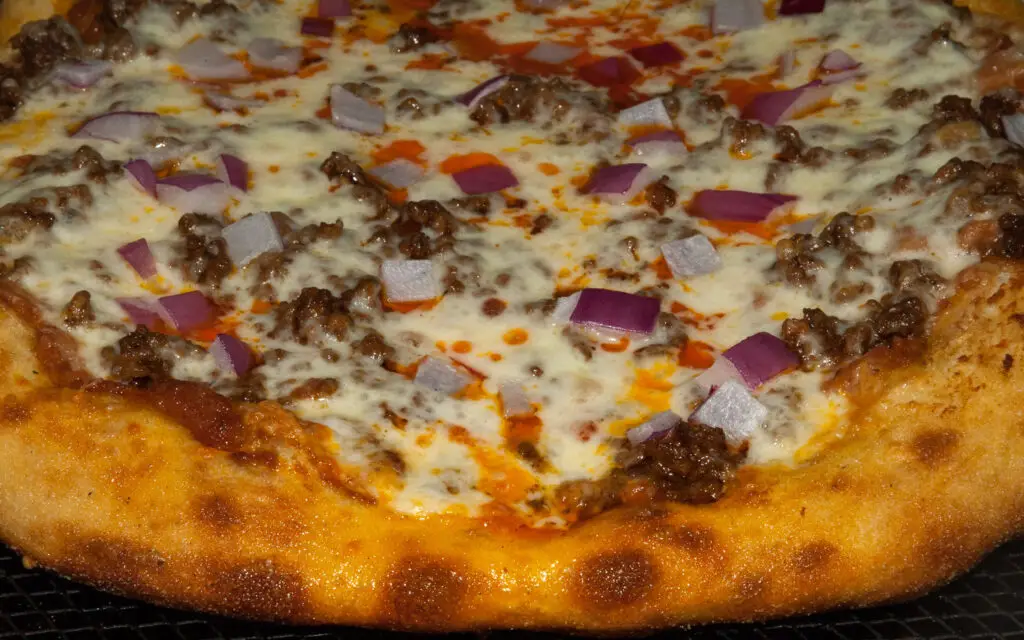
Taco Pizza!! – This delicious thing easily feeds the whole family.
Introduction
For Pizza dough, it’s all about hydration. I find 66% is ideal. Any more and the dough gets too hard to handle. Perhaps if I used a proper mixer I might have better luck with the higher hydration. I find that my Ninja food processor does a great job quickly.
For the flour, I look for the highest protein OO (double oh) flour. I also add semolina. I do 20% semolina with the OO flour. I do not put oil into the dough until I’m ready to cook. Although most recipes you will see add the oil here, I find adding the dough earlier interferes with the gluten building process.
Steps
- Place the Ninja mixing bowl on a digital scale with the dough blade in there. Tare out the scale. The scale should be in grams mode.
- Start by combining the water, sugar and yeast together in the blender. Allow this to sit for a few minutes. You are activating the yeast. There should be bubbles forming in the mixture.
- Next add the salt and the semolina. Mix this together well. The dough blade has a grip on the top of it you can use to twist the blade.
- Now add the OO flour.
- Finally while holding the top of the Ninja with one hand, push the dough button.
- Sometimes I wait a few minutes then hit the button a second time. Be careful not to get the pizza dough too hot. This will kill the yeast before it can do it’s thing.
Calculator
Quick Selections (weight @ hydration %):
Sizes are approximate. The amount the flour rises is a big factor.
| Water | Add first. Don't forget to tare out scale after each line. | |
|---|---|---|
| Yeast | Add second. Don't forget to tare out scale after each line. Last warning. | |
| Sugar | Add thrid. Mix and let stand for 5 or so minutes. | |
| Salt | After yeast is activated, add salt. | |
| Selomina | Add to water, yeast, sugar, and salt. Then mix well. | |
| 00 Flour | Add this much 00 Flour. | |
| Total Flour | This is the total flour. |
Proofing and Cooking
- After mixing, put the entire container in the refrigerator and let it cool for about 30 minutes. This will let the gluten process start. Once the dough cools and becomes easy to work with, remove it from the mixer.
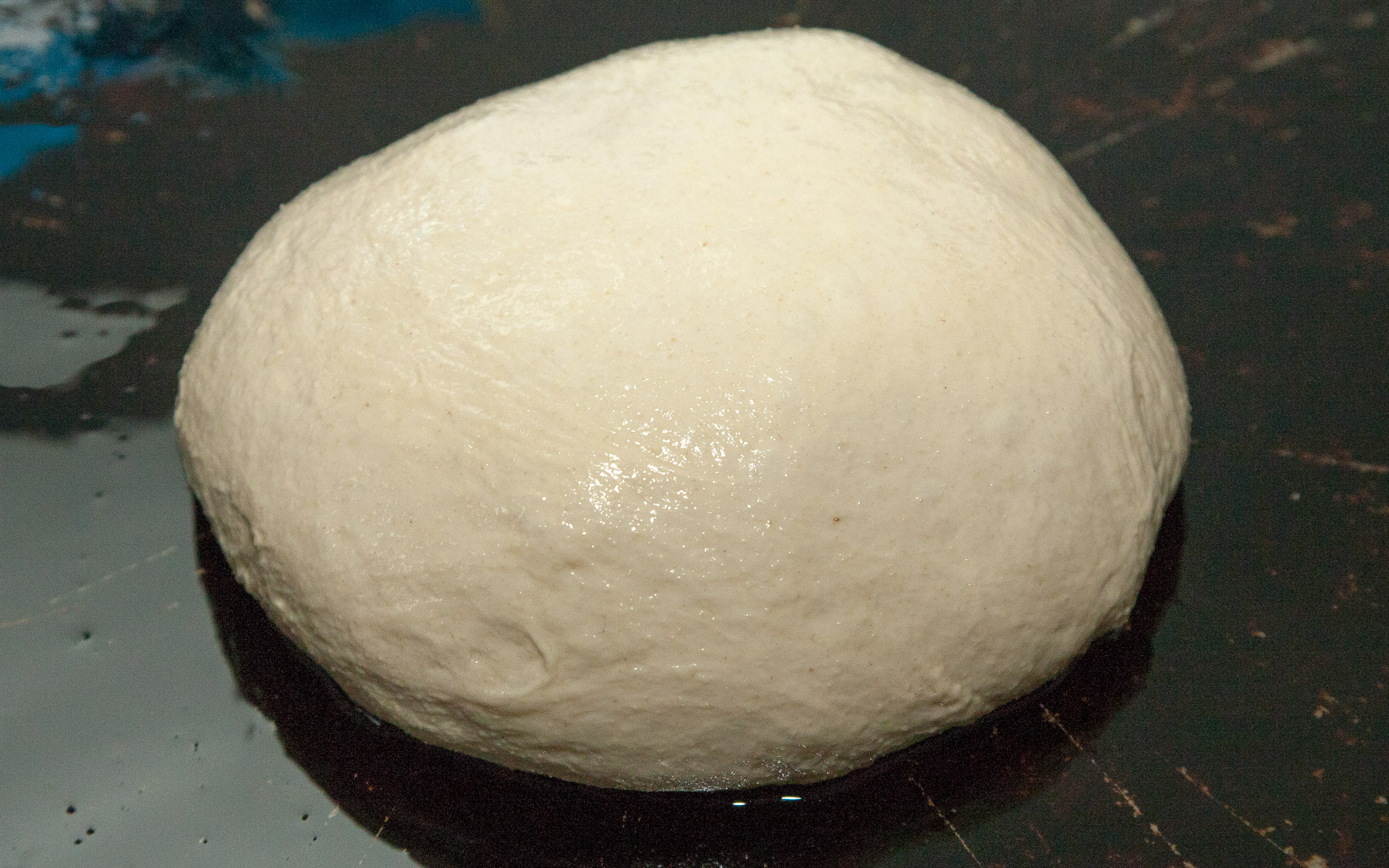
- Work the dough into a ball. Wet your hands if you have issues with the dough sticking.
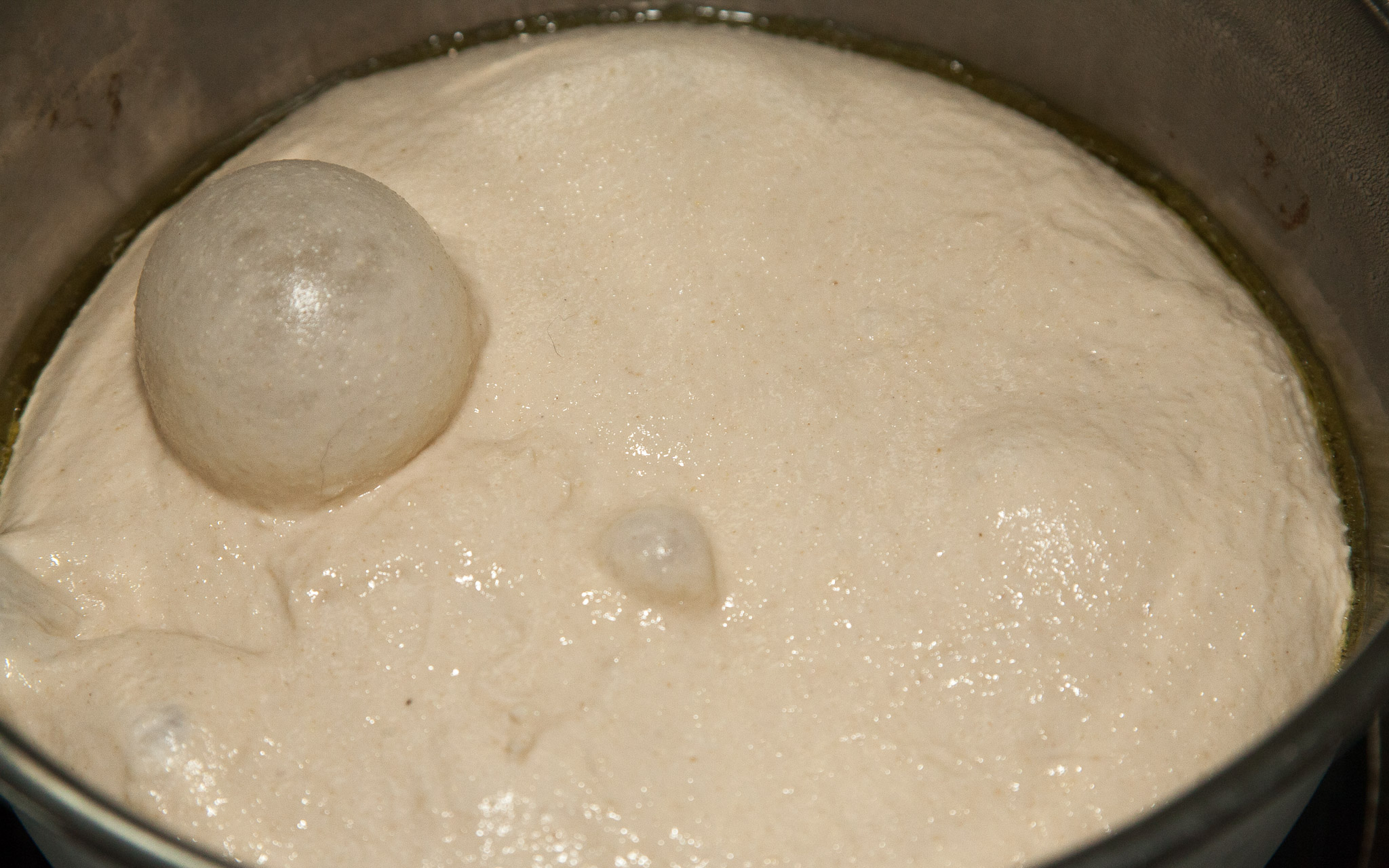
- Oil a metal bowl with olive oil, and place the dough in the bowl.
- Cover with plastic wrap. Do not use foil. The dough will react with the foil and create an electric current. The foil will have holes in it and there will be burn marks on the dough. Who knows where the foil that’s missing went (the hole) but you probably don’t want to eat it. It’s been chemically changed into something else.
- Proof in the refrigerator over night. 24-48 hours seems to be the sweet point.
- Four hours before cooking, remove the bowl from the refrigerator and bring up to room temperature.
- I usually oil up the cookie sheet and place the doughball on there. Then cover it with another large bowl.
- Cover the doughball in a light layer of olive oil.
- You can speed up this process by reballing the dough every hour. Add another layer of oil after reballing.
- These layers of oil help prevent the dough from dying out.
- You are ready to cook. Heat your oven up to 500 F (or the highest setting.) Pizza is cooked professionally around 800 F.
- Press your doughball out into a circle. Leave some air in the edges if you’d like, but I find it not necessary.
- Using a rolling pin makes it real easy to keep a consistent thickness.
- When pressing the dough ball out, first you want to dip each side of it into some flour. You can use Semolina here, but it adds a gritty texture some people don’t like. Coating the outside of the doughball in flour makes it more workable.
- If you have problems with it sticking to your hand, coat them in oil. You can just wet them too.
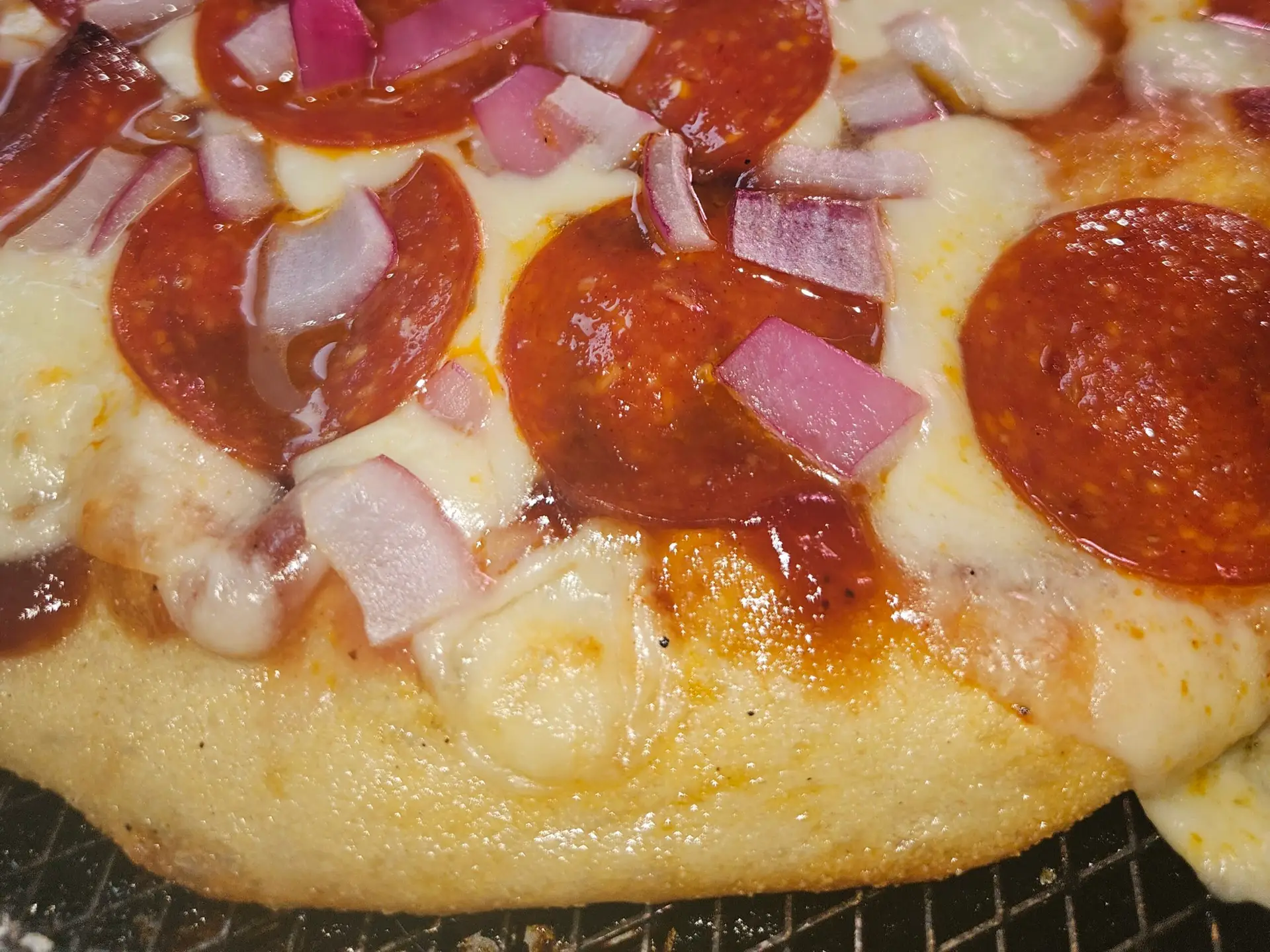
- Place your sauce on the pizza. Coat the remaining crust in olive oil. Then place in the oven for 5-7 minutes. Watch for the crust to start to turn color.
- Remove the pizza and reduce the oven to 400-450 depending on your toppings. Thicker toppings need a lower temperature (and longer cook time)
- Add your cheese and toppings.
- If you have a pizza screen, transfer it to the screen.
- Place the pizza back into the oven for another 7-10 minutes. This part depends on how long it takes to melt the cheese. The size of the pizza and thickness of the toppings will cause this time to vary.
- Let the pizza cool for about 5 minutes before cutting.
- Transfer to the solid sheet or cutting board to cut.
- When done, transfer back to the screen. This will help keep the crust crunchy.